Showing posts with label science. Show all posts

Wednesday, November 14, 2012

Earthquake predictions: is it more a future project or a reality?


Chile is a south-american country that characterizes for being seismically active; thousands of earthquakes occurs in this area annually. Fortunately, most of them are practically imperceptible for the population, but history has shown us that some of the most violent and destructive tremors in the last century took place in our territory: Valdivia (1960) and Constitucion (2010.) For those reasons, it has become the subject of research for many international scientists and other amateur investigators interested in the topic of quake predictions.

After February 27, 2010, many geophysicists, seismologists, and even structural engineers decided to come to visit the place where the epicentre of the disaster was located since they saw there a great opportunity for collecting crucial data that in a future might help them to develop a system for the prediction of  precise Earth movements. In this sense, Dr. Jeff Genrich, a professor at California Institute of Technology, explained that nowadays, quake scientists are able to make predictions of seismic movements, but they can ensure the level of certainty of them. 

However, early this year, a group of four Brazilian publicists called Quake Red Alert appeared in our national scenery claiming that they had developed an effective formula based on algorithms that helps them to foresee where and when an event will happen. They used the media to forecast their finding, specially TV programs and Tweeter. The popularity of the team did not stop increasing after they succeeded in some of their predictions. Equally, they were received lots of experts'critics since nobody already knows how their method works; consequently, it is not possible to prove it empirically

Probably, neither scientists nor the Salfate's friends are convincing enough since there is no strong support for saying that it is possible or not to predict an earthquake. So it is just a matter of beliefs. The only thing that I can assure is that Chile will follow shaking, so it is important for you to have a plan in case of emergency since prevention is the only way to save lives. In this web page, you can find some pieces of advice that will help you to get prepared in case of a new quake.


Tuesday, November 13, 2012

Using Science for Life Extension


Many people would give everything to make their lives longer; to see their grandchildren grow or to increase the number of experiences they live.

It is a fact that we all have to grow old and die someday, but the question is what are people willing to do to extend their lives?

Anti-aging medicine has appeared as a very controversial solution to the aging process of life. This technology refers to the study of ways of slowing down or reversing the process of aging. It is based on tissue reconstruction processes with stem cells, the use of artificial organs, and the molecular reparation of the human body, which, eventually, would give the body a younger condition.

These therapies offer people the possibility to have better lifestyles and to guarantee a more delayed arrival of death. This may sound amazing considering that most people fight against age and the idea of dying, however, when talking about the demographic consequences, or the unknown side effects that this technology can bring, opinions change.

While some politicians claim that the use of this technology will produce overpopulation, due to a decrease in the number of deaths; some scientists insist that extension therapies, should be given to everyone who believes that live is worth living. Furthermore, they state that anti-aging medicine has to be distributed equitably because everybody has the same right to live.

Consequently, it becomes important to ask ourselves how much are we ready to sacrifice to look younger and live more. Is it worth? Or, is it better to accept what life has for us? Are we ready to face the unknown side effects that this can produce?

Finally, considering the effects on population, is it a good idea to distribute this technology to everybody? Should we use it just for specific purposes?

Let's read more about this topic :  Life Extension: Science Fact or Science Fiction?


Friday, November 9, 2012


Animal research: the cruellest side of scientific progress

Vivisection is a common scientific practice that consists of doing testing on living animals so that it could be possible for researchers to get a better understanding of how human diseases works and consequently to find a cure for them.

According to official statistics, more than 50 millions of sentient beings (cats, dogs, birds, pigs, and monkeys) are used annually for laboratory investigation just in the United States.

In this sense, if we had to choose a single word to define the process of animal experimentation, it would be cruelty since inside the research facilities animal are deprived from all their rights: they are taken away from their natural environment, then they are shut in small cages, and finally they are turned into the subject of pharmaceutical research, which means that they must undergo painful surgeries and even the supply of toxic substances. At the end, after having finished the experimentation period, most of them are euthanized, or as a result of all that manipulation, they end up dying. 

But is all this really essential for the development of new medical treatments as scientists have claimed for years?

To animal right supporters, it is not since they deny this kind of investigations could provide reliable results due to the enormous differences between animals and humans organisms and they way they react to the same drugs. A backup for this argument could be the cases of 
Clioquinol and Thalidomide; two medicines that seemed to have had positive effects on thousands of animals, but in humans they did not worked well. Indeed, Both failures caused lots of deaths in Germany and Japan respectively.

To sum up, I think it is high time that authorities stopped investing our resources in such macabre activities, and we got informed about the cost of progress since, in a way, we are responsible for the abuse if we do not show our disapproval against this.

     
Now, with all the evidence at hand, do you still agree with animal testing?

To learn more about this controversial topic, you can visit the following site.


Resistance


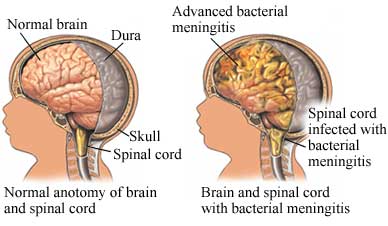
We can see in the news how meningitis is a hot topic nowadays, but what is it?
How powerful is nature in front of the science?

Meningitis is the name given to the inflammation of the meninges membranes that surround the brain and spinal cord. This inflammation might be caused by different viruses and bacteria causing headache, fever and stiff neck, nausea/vomiting, and changes in behavior.

In order to check if your symptoms are caused by this infection, several tests are prompt: Evaluation of the blood, brain scanning, and cerebro spinal fluid analysis. Once there is a confirmation of the infection, the treatment include: antibiotic, antiviral, anticonvulsants, corticosteroids, and sedatives according to the stage of the patient.

Now, what it’s even more important: prevention. Of course, there is a vaccine to prevent this infection, and is injected by 6 months of age 3 doses of Hib vaccine, and then between 12 and 18 months, a fourth dose should be given.

Then, why the number of infected people has increased? Well, as I said before the infection is caused by different viruses and bacteria which might change for several reasons, such as: combination to other stumps, mutation, resistance etc.

It seems that technology is not perfect, it has its flaws when it comes to prevent or cure some diseases, and that’s obvious since the natural world change every once in a while in order to adapt to the new scenario. Technology move forward, but apparently the natural world goes a step beyond.

What do you think about it?

Tuesday, November 6, 2012

Is someone out there?

Do you believe in aliens? When I was little I really liked the idea of having super intelligent neighbors that would come to visit us and help us out with all our problems. For a nine-year-old girl it might be interesting, but what about science itself. Can we call ufology a pseudo-science?

The Extraterrestrial hypothesis (ETH) has being totally rejected by the scientific community. Mostly because there is no evidence that living creatures can travel in the space, plus our closest planets are totally empty. Therefore, all the Hollywood’s ideas that have been showed on the movies are just pure fiction.

Two hypotheses have made lot of noise. One is the portal theory, which was proved by Nasa’s researchers in the university of Iowa. It says that maybe those “travelers” came from portals that open in our galaxy and are connected with others.

The historic aspect has also being really important. It’s believed that the Entities presented in the mythology could have been these special visitors. Some answers could be found, like how some civilizations could have developed advanced technology tools. Even the pyramids construction mystery could be solved.

Some researchers attribute our race to a mutation made by aliens to create a similar intelligence, which could also explain the difference between us and the rest of the animal kingdom.

Do you think all this is going too far? Would you like to find out that your religion is based on aliens’ visits? Is it really important for us to know all this? 


Sunday, November 4, 2012

Immortality exists!


Since antiquity, the quest for immortality has been one of the most enduring missions of man. Unfortunately, every time man has tried to defeat nature, they have lost the race because the desired immortality has already been achieved by nature. Unlike humans, a particular species of jellyfish, called Turritopsis Nutricula has accomplished what no other biological being on our planet has ever been known to do:  reverse it’s aging.   

After becoming sexually mature, this species returns to its polyp state thanks to a biological process called transdifferentiation, in which a cell (without being a stem cell) can become a completely different cell.  This process allows an organ tissue to regenerate after suffering an injury, and this ability is triggered in jellyfish when they are threatened. This unique characteristic of the Turritopsis nutricula would be breathtaking to behold, like watching a butterfly become caterpillar again.

The existence of this unique creature has been known for over a decade, and its method of transdifferentiation has inspired scientists to find a way to make stem cells use this process for renewing damaged or dead tissue in humans.  Understanding and translating this process into human genes would be helpful to the many aging-related ailments we face, but there lies an obstacle as well: jellyfish are one of the world’s simplest creatures.  As a consequence,  transdifferentiation may be possible only because jellyfish don’t have a brain or a body with more than one or two organs.  However, we know that it is quite different with humans, a much more complex and delicate species.  For instance, would a person with a regenerated brain be the same as the person we knew before?  Or someone else entirely?  Is the Turritopsis a guide to where we’re going, or just a mirage in the desert, showing us immortality but never letting us achieve it?

                              Now I invite to hear this excellent video about Turritopsis  


Here you can read a research paper on this amazing jellyfish

Monday, October 29, 2012

I do not want a child now!

After long analyzes and studies, oocyte cryopreservation, commonly known as "Egg frezzing" is no longer an experimental procedure, and now it has been used in high scale in "mainstream" clinics.

It may sound perfect since more couples are deciding to delay pregnancy and for women with fertility or cancer treatments. But data is rather incomplete: it suggests that reproduction might not be successful as former studies showed. It is a fragile procedure that can affect the cells and provoke long-term effects such as increasing the risk of rare disorders as the Angelman Syndrome (a neurological condition). 

In 2008, when the American Society for Reproductive Medicine (ASRM) decided to label this technique as "experimental", only women going through fertility-damaging treatment for cancer or other type of treatments had the option to freeze their eggs to use them in the future and finally have a baby. However, it was used for other purposes too--which society didn't approve that much--such as for delaying having a baby (even if they didn't have fertility issues). But it wasn't until October 22, 2012, that mainstream clinics were allowed to offer this service (for a fee), encouraging more people to use this service. But not all clinics can offer these services since the ASRM policy is very strict. 

It may sound amazing that more than 900 children were born by using this procedure, but reproductive biologists keep on discussing the benefits and success of this technique in younger women, mainly because cells productivity may decrease with age. 

Who should use this technique?
In the case of women that don't want to have babies at the moment, is delaying reproduction by egg freezing just a fancy (and expensive) technique that crosses the line of natural reproduction?     

Would you like to hear the experts' opinion? Also, a woman explains why she decided to freeze her eggs. 


Saturday, October 27, 2012

Hey, pay attention to your diet!

    Most people do not care too much about their daily diet. In fact, people tend to think that eating in a fair amount carbohydrate, proteins, and fat is good for health. Most of the time, we do not realize what the implications of what we are eating are. Obviously, eating is a need for us as human beings, but there are a lot of food that are harmful for our body and system. Indeed, diet can have a notable impact on us, especially on our reproductive health.
    So, men, be careful with your diet, above all with dairy and carbs. A recent scientific research suggests that the more carbohydrates or dairy (milk) a man eats, the poorer the quality of his sperm. Similarly, two other studies focused on in vitro fertilization, and found that women who lowered their carb intake while upping their protein consumption stood better chances of becoming pregnant. In these studies, a dietary analysis revealed that carbs accounted for roughly half of all calories consumed among the participants who experimented with. The group of scientists found that carb intake did not appear to have any impact on sperm mobility or shape. However, they found that the more carbs consumed, the lower the man's overall sperm count. 
    Of course, we would indeed expect that something produced by the body would be affected by the quality of nutrition put into it. For one thing, we have known for years, from the female perspective, that the quality of nutrition that a woman takes in at the time of conception, or even before conception, has an influence on that child's health long term in all sorts of ways. So, it should not be surprising that nutrition would have an impact on men and the quality of their sperms, which are basically made by protein, or on in vitro pregnancy rates. You can read the article here and know how the experiment was conducted
    At some point, we realize that some things around can be dangerous for us — things that we consider good and important in our life. In this aspect, technology cannot do much, but science can; it has helped people to be aware of good things in order to have them in life, and has discovered damaging and hurtful aspects in order to avoid them and have a better way of living. What would happen if science did not exist? Would it be easy for us to take care of ourselves? What would happen if science did not discover how bad milk and carbs are for men? Sometimes small details in life are considered insignificant, but at some point can they affect people's life? 

Tuesday, October 9, 2012

Your body as a gift


Have you ever thought about your burial ceremony or what will happen with your body after passing away? I guess you not; at least, I hadn't until a year ago when my dad decided to sign an online request for body donors after reading an article about it. When he received the letter confirming his desire my whole family was in shock. I didn't even know that you could donate your body! We all were against my dad’s idea but, according to him, his corpse will be useless after the funeral and he didn’t want to be eaten by worms; for those reasons, he will give his body to the Universidad de Chile's Medical School.
These are some of the uses of
donated bodies for research.
The main reasons for donating your whole body or part of it to Science (tissues are also permitted), and why Universities want them, are three: 1) for anatomical research, allowing college students from Medical Schools examine and evaluate the body in detail; 2) to train surgeons and develop new surgery techniques, and 3) for research, in order to use them for scientific studies to improve the understanding of the human body. My dad isn’t that crazy after all!
Universidad de Chile is the only Institution that receives body donations in our country, and they use them for research, pedagogical purposes and to exhibit them in their Museum. If you are interested in give your remains as a present for research, you must consider two important points; sign a legal consent and think about being exposed and manipulated twenty years approximately!  
Even when I didn't understand my father's ambition since the beggining, I can say that now I gree with him. Perhaps I'm not going to donate my body (it's quite embarrasing!), but I comprehend the relevance of his future contribution to Science. 

What about you? Would you donate your body?

Look for futher information HERE!

Wednesday, October 3, 2012

It all began with Dolly.

Fifteen years later Dolly sheep's clonation, cell nuclear transfer is back on lab tables.
generally speaking, cell nuclear transfer consists in replacing an embryonal cell's genes which nucleus was removed by the genes of an adult cell. 
Since then, many researches have clonated different animal species such as mice, pigs, horses and cows. equally, there has been scandals for example the case of Woo Suk Hwang who in 2004 announced that he cloned a human embryon, but it turned out to be false and of course there is the ethic dilemma over its use.
Human clonation is supossed to be useful to develop  new healthy cells or tissues and in this way help people treat incurable diseases such as parkinson by using the cellular reprogramming technique which consists in inserting one or more genes within an adult cell, for example the skin in order these elements to be the ones which start reprograming internally that cell with no need to use an embryo or an ovule, leaving behind any possible ethic debate. from this point of view clonation seems absolutely positive, the problem is when human ambition could raise the idea of clonating a whole human being. would this be ethic? would this person be as normal as you and me? some religious people think that cloned humans will have no soul, what do you think about this? would you like to have another you?

In this video there is a cloned cat which glows in the dark, maybe cloned people would have special features too.

Monday, October 1, 2012

Nanotechnology in food


Nanotechnology in food 


Many studies are being undertaken in the field of nanotechnology regarding food. For instance, scientist are embedding silver nanoparticles into the plastic in which bins are packaged, the particles will kill any bacteria stored in the bins that could be harmful to human body; scientists are also trying to develop nanosensors that could eventually detect unsafe elements in a package plant; nanocapsules are being developed in order to provide people with the nutrients they need. This nanocapsules might have the function of releasing nutrients inside of people´s body when nanosensors may detected that the organism is in lack of them.  But that is not all; experts are also working on “interactive food”. This could be possible with nanocapsule containing flavor and color booster which are activated when someone could eat the food. However, the method that will be used to activate the boosters has not been told, yet. With this, we can come to a conclusion that not only is technology a detonator when it comes to obesity, but also a collaborator if it is well-used. So, should be blame technology for the incredible risen in people obesity? Or should we introspect and think about our own habits and how they affect our body and health? Isn’t it all about taking technology as a “friend” instead of an “enemy”?

Sunday, September 30, 2012

The Broken Link Between Science and Humanity


“Since when did people start expecting science to be humane? To study the body, you cut it open. To study the mind, you isolate it by crushing the heart. Historically, that’s how science has advanced.”


The previous quote was taken from a videogame I recently played, and it shows clearly how science has advanced thus far. In order to get all the advances in technology, scientists have been isolating their humanity and their morals to discover new aspects of the human body or to find the cure to diseases; and most of the times, they forget that humans are not mere objects of study.

J. Marion Sims is commonly known as the “father of gynecology,” and he found a solution to a childbirth problem in the 19th century. However, the process of finding the cure was quite polemic because he mainly used black women, and he did not use anesthesia on all the patients. There are cases of women who were tested more than one time—some of them underwent the procedure 30 times, and it is believed that he bought and rented most of his “guinea pigs.” That is not all, he refused to apply anesthesia on all the patients even though it was already available at the time.


This specific example helps me to prove what varied forms of arts have been saying for a long time: science has lost his humanity. It has never been shown clearly, for most of the times is hidden from us; but it is happening, and people will eventually know.

Friday, September 28, 2012

Manipulating DNA


Nowadays we have entered  into a new scientific age in which scientists are not only capable of reading genetic code, but also they are capable of writing it. With the knowledge of this code through which life is programmed, they have the latent possibility of reprogramming that code and redesigning life itself. This new mastery of manipulating DNA is called synthetic biology.

This field combines science and engineering, in which standard parts (genes,cells, amino acids, bases, proteins,circuits) can be assembled using bioinformatic and software modeling tools  that will  insert or modify biological  functions to create new characteristics in organisms that don’t exist in nature. Through this, scientists seek to understand how living things work and furthermore they want to solve problems with potential applications differing from fighting pollution and cancer to manufacturing cheaper fuel and drugs.

Nevertheless we all know that when humans have such kind of power in their hands, they become ambitious, what if synthetic biology opens the possibilities to create biological  weapons, in which a genocide virus could be spread to attack enemy countries? or can you imagine “DNA hackers”  that will disperse secrets DNA codes through the internet? is this going to permit  the elite to redesign themselves to get superior organs and be more intelligent and long-lived than the rest of the world? will this power be left in the hands of only the most powerful multinational companies?what do you think? 

Do you want to see SPIDER-GOATS created by synthetic biology?  Then  you have to watch this video!


Tuesday, September 25, 2012

Maternal care, is it a gene?


I have always thought that the so called "Maternal instinct" was something that few mothers could develop. Maybe is something that every female have, even in the animal kingdom.
The Rockefeller University's researchers in New York have tested the maternal behaviour in  mice. They divided a large number of mice in half; the first group got lowered the chemical located in an especific region of the brain, medial preptic area, responsible for the protective care, sexual behavior and aggression, where there are high levels of oestrogen. The second group was being observed with the normal levels of the chemical in the especific group of neurons.

The engineered group, changed the "maternal" behaviour automatically, this is, the licking, nursing and protection from the female mice to their pups were almost zero. The results were especific to the maternal/sexual behavior gene since no other behaviour, such as sexual receptivity or aggression, changed during the experiment.
The other group remain intanct, as evidence that the "maternal behavior" is directly related to the gene that is responsible for protecting, caring and nursing their pups.
This experiment can aboslutely show us that the maternal care and nursing in mice can be applied to other species, even in humans since it gives the opportunity to experiment with humans, and provide the prescriptions of chemicals to enchance the maternal care.

What happens in those cases where mothers do not care about ther children? Is it possible to generalize this evidence to the human behavior?

Friday, September 14, 2012

How Industrial Parks Have Affected People’s Lives


Both science and technology have allowed society’s growth in many aspects: education, health, and economy, among others. They have also led to the enlargement of industrial areas in many cities, and this expansion sounds good because of the big leap it means for the economy, but have you thought about the cost?

Living conditions in industrial parks are far worse than in other areas of the city. People who live near refineries, thermoelectric plants, and other types of factories are exposed to several chemicals that endanger their lives in many different and critical ways. It is common to read a piece of news saying that X amount of people were intoxicated because X problem occurred in a factory, and most of the times, this information refers to people who do not even work in those plants. Another type of news that is not uncommon to read relates to people who have been hospitalized because of lethal diseases that these factories produce.

Moreover, the government pays little attention to these issues. For instance, in 2008, the USA TODAY conducted a research regarding the identification of schools near toxic spots. Do you think the U.S. government was interested about this? No; in fact, the U.S. Environmental Protection Agency never undertook such investigation.  

It is good for a country’s growth to have factories and plants of any type; however, previous analysis and studies should be mandatory before their construction. If the government does not pay attention to this, who is going to do it?

If you are interested in the USA TODAY's article, check this website.

Saturday, September 8, 2012

A new kind of specie?

I was reading Frankenstein and then it made me think about what a great visionary Mary Shelley was.She challenged the limits of imagination and put a spotlight on the moral, ethical and religious implications of science, when she decided to put a pen to paper and create a new human being, using the power of electricity and the parts of the body of a dead man to finally bring a lifeless entity to life. No one could imagine in the 18th century that Shelley’s ideas would continue to resound within our present age.

Nowadays scientists are the new Dr.Frankensteins of our century. The ideas of an accelerated increment of efficient in medicine, industries, companies and any other field that can produce and facilitate our existence, besides the attempts to create life, are issues that we can see clearly represented in the creation of robots. Initially they were used for repetitive functions, then industries realized that using robots saved more money than using people to work in certain tasks,and from that moment on with technological advances, a big industry started to develop  and more complex and sophisticated kind of robots were created. Nowadays there are many types with different functions; military robots, mining robots, nanorobots, telerobots, space robots, even robotic prostheses, etc and everyday scientists are trying to perfectionate humanoid robots to look like us and to imitate our behavior.

On the other hand, as this technology is making a breakthrough, ethical and moral issues are taking a prominent role and making us reflect on the role of science in technology, evolution and human progress. We can’t deny that robots can make our life easier, but which are going to be the limits of science and technology? are they trying to create a super man? Is there going to be a robotic war?  Are we going to use robotic organs to be stronger, smarter and richer?  is this the new social gap between poor people and rich ones? Are they going to be a new kind of species in our planet? What  do you think?


Friday, September 7, 2012

How far have robots come?

    What images go to your mind when you think about robots? Some people view robots as friendly - as nice partners or helpmates. Others view them as a threat - machines with superior intelligence and abilities, maybe one day replacing humankind (like the movies always show). Still, to many others, robots are more the fare of science fiction than of real life. Today's world is full with robots; in fact, there are almost one million industrial robots in service worldwide, and of these almost half exist in Asia (Japan, China, Korea). So, I wonder myself, why is there such demand?

    Imagine a worker who is always on the job, who never complains, and who can work hard 24 hours a day, all days of the week. Well, industrial robots are taking the role of  a host of automative, electrical, and household items. Robots live up their name, which comes from the Czech word robota, meaning "forced labor."  Unlike humans, robots are more efficient, because they are programmed to execute a specific action. Yes, robots are doing what the man is not doing!

    Now, robots are more equipped with such things as voice-recognition software, gyroscopes, wireless data communication, and a range of sensors including those for heat, force, ultrasound, chemicals, radiation, etc. More powerful and versatile than ever, robots are performing tasks that were viewed as imposible in the past.

    Nevertheless, are robots capable of making us happy, or making our lives easier?  In time, technology has been developed and how far robots progress remains to be seen. But, is the human able to create a humanoid? We already saw what science and technology have done to create artefacts that work their way into our lives... Is it really possible to create a robot resembling a human, imitating man's characteristics, feelings, and behaviours? How far have technology and science come? Is there any limits for them?


Here are some few examples of robots:

-->   A pharmacy robot with mechanical arms retrieves and dispenses medication within seconds in a hospital in UK.


--> Elderly patients in Japan take  turns stroking a cute, furry  robotic baby seal. It is use as a  therapy and companionship.

--> A robot with three arms stands over a patient.


--> Just press a button, and a disk-shaped robot goes to work  vacuuming your floors.