Monday, November 5, 2012

Are you sure you want a new mobile phone?

Mobile phone radiation could be highly hazardous for our health. Studies have shown that not mobile phones, but also any kind of electrical appliance such as microwaves, dishwasher, alarm clocks, etc. are usually emitting electromagnetic radiation (EMR) . The problem is that people hold mobile phones near their ears, carry them near their bodies, and use them many hours each day. Moreover, diseases such as brain dysfunction, brain tumours, and even sleeping problems have been linked to EMR . Nevertheless, this issue comes from the very first beginning of mobile phone industry. The thing is that companies were focused on the profits that they could get rather than anything else. So, they pushed regulatory agencies to allow mobile phone to enter in the market without testing them. 

Nowadays, millions of people are exposed to the danger of electromagnetic radiation, and it is said that regulatory authorities refuse to admit how unsafe using this devices is. 


In my opinion, it is hard to stop depending on mobile phones once you have already gotten used to it. However, if authorities in the field were clearer about the risk attached to them, it could be much easier to leave them aside. Would you continue using your mobile phone if you knew that the damage is confirmed? What could you do to protect your health from EMR?


I suggest watching this video... Then you can draw your own conclusions.

http://www.youtube.com/watch?v=hqafAzugooY

Sunday, November 4, 2012

How hard is to tell red from green?


Whenever I ask my boyfriend to help me decide which item to buy because of its color, it is like asking a monkey unable to tell red from pink. Maybe I am overreacting, but colorblindness is an issue in the animal world too, please do not take it wrong. Actually, great numbers of monkeys are born with colorblindness or with other vision problems. All male Squirrel Monkeys are colorblind just to name one. Fortunately, for them something is changing, since these are disorders affecting humans as well, scientists are focusing on studying and testing gene therapy techniques to reprogram their color receptors, practices that could be used on humans in the future.

These long term techniques are about retraining an adult brain with results a few months later, but once the condition has been modified, the animal does not make the same mistake over and over, it changes for ever. Which is even more revealing is that once the reprogrammed receptor cells began working monkeys’ reactions were much quicker.

Even though initial experiments were just focused on animal colorblindness, subsequently identifying pair of colors, scientists are convinced these tests will certainly lead to treatments of a wide range of human vision problems.

What is really chocking is that scientists finally understood something about animal testing as well, because these experiments and treatments involved just a few monkeys picking different fruits and touching screens. No drugs nor vivisections, and amazing results. When it comes to my boyfriend and 8% of the total male population, nowadays it’s better if I ask my girl friends which item should I buy.

Now, do you think this treatment will actually contribute to people with visual problems? or it would be better if scientists focused on improving future generations' genes in order to avoid these disorders? Would you approve it or not?

Here it is a link where you can find more information about this interesting topic and make a clearer view of it


Ford's Motorcity speed-freaks: EcoBoost Engine


There has been a lot of controversy in the field of ecology. Saving the world is important since the species living on it are in danger of coexistence, due to the natural misbalance product of the action of man.

The raw material is extracted every day in huge amounts. Copper, Gold, Oil, Marble, and others are exploited and often big company owners figure out how to get more and more, although a few or none give much thought on other means of manipulating (it cannot be created) or getting energy from nature.

But man tries to help nature. Actually, man has created some sort of device to help nature “breath” for an instant. One of the Britain’s most famous and finest car brands has come up with an idea that will have an impact in the car industry. 

The Ford’s new 1-liter EcoBoost Engine is the proof that scientists have been trying to diminish the amount of raw material used. This gem for speed-freaks is an engine powered with 170Nm Torque (the turning power of an engine) and 125PS (Pferdestärke: German term for “Horse power”) are quite superior to an average 1.6-liter engine. It has also a smaller three-cylinder block (21cm by 30cm), so that it can be put onto an a4 sheet of paper without having parts out of it.

This gadget is a little bit expensive, but most important of all is that it makes no annoying noise (no acoustical pollution) and it uses almost half of the gas we use to fill another car’s engine. This new breakthrough, as the media coverage shows, seems to be a way of saving money and nature as well.

Would anyone spend money on this new device? 

Further info
Article here: http://1l-ecoboost.fordmedia.eu/documents/factsheets/FS_Ford1.0-litreEcoBoostEngine_EU.pdf

Media coverage on the issue: http://www.autoexpress.co.uk/ford/focus/18601/ford-focus-10-litre-ecoboost


Immortality exists!


Since antiquity, the quest for immortality has been one of the most enduring missions of man. Unfortunately, every time man has tried to defeat nature, they have lost the race because the desired immortality has already been achieved by nature. Unlike humans, a particular species of jellyfish, called Turritopsis Nutricula has accomplished what no other biological being on our planet has ever been known to do:  reverse it’s aging.   

After becoming sexually mature, this species returns to its polyp state thanks to a biological process called transdifferentiation, in which a cell (without being a stem cell) can become a completely different cell.  This process allows an organ tissue to regenerate after suffering an injury, and this ability is triggered in jellyfish when they are threatened. This unique characteristic of the Turritopsis nutricula would be breathtaking to behold, like watching a butterfly become caterpillar again.

The existence of this unique creature has been known for over a decade, and its method of transdifferentiation has inspired scientists to find a way to make stem cells use this process for renewing damaged or dead tissue in humans.  Understanding and translating this process into human genes would be helpful to the many aging-related ailments we face, but there lies an obstacle as well: jellyfish are one of the world’s simplest creatures.  As a consequence,  transdifferentiation may be possible only because jellyfish don’t have a brain or a body with more than one or two organs.  However, we know that it is quite different with humans, a much more complex and delicate species.  For instance, would a person with a regenerated brain be the same as the person we knew before?  Or someone else entirely?  Is the Turritopsis a guide to where we’re going, or just a mirage in the desert, showing us immortality but never letting us achieve it?

                              Now I invite to hear this excellent video about Turritopsis  


Here you can read a research paper on this amazing jellyfish

Smokers miss more work than nonsmokers


For decades, It has been shown in countless studies the damage produced by cigarette smoking. For instance, cigarettes increase stomach inflammation, ulcers and gastritis. However, there is a study that shows something that I am pretty sure you are not aware of. A report published by the magazine “Addiciton” revealed that smokers miss work two to three days more per year than non-smokers. Only in the UK this issue has cost nearly 400 million pounds thousand, one thousand 700 million euros a year.

The data comes from a review of 29 independent studies conducted between 1960 and 2011 in Europe, Australia, New Zealand, United States and Japan, with a total of more than 71,000 public sector workers and private. The authors of the report, members of the University of Nottingham (UK), focused on the smoking habits of workers, and analyzed the frequency with which these were absent in the last two years. Smokers were 33% more likely to miss work than nonsmokers, and they missed an average of 2.7 working days per year, as explained Jo Leonardi-Bee, author of the report. They also calculated that current smokers were 19% more likely to miss work than former smokers, so encourage them to leave the snuff may also cause "considerable cost savings for workers."

In addition, the study has also shown that children who live with smokers are also more likely to miss school. A passive smoking has been associated with increased susceptibility to the development of various diseases, from asthma to heart attacks, which makes workers must miss work more often to stay home with their sick.

In my case, I stopped smoking three months ago and I feel better now. It is hard but not impossible. In this video there are some smoking effects. Are you aware of those effects? Do you think that smoking is related with missing hours of work?


Saturday, November 3, 2012

Are Good Looking People Selfish?


Most people when imagine their perfect dates have in mind someone with a beautiful face, but a recent study shows that good looking people may not be recommendable partners.

This is mainly because people with symmetrical facial features, which are socially considered more attractive, are not very cooperatives and most of the time give priority to their own interests, in other words, this study demonstrates that beautiful people are more selfish.

The investigation was in charge of Santiago Sanchez-Pages and Enrique Turiegano, both workers of Spanish universities, who came to the conclusion after applying the "prisoner's dilemma" game known as a model of behaviour. Two players were each given the option of co-operating for the greater good; or taking the selfish option, with a chance of gainining more if the other player chose to cooperate.
After the game ended, players' faces were analysed.

Here you can see a better explanation of the game

The research found that individuals with the prettier faces were more prone to act selfishly, they weren't interested in cooperate and didn't expect cooperation from the others.

A likely cause for this behaviour is "evolution". Earlier studies have suggested that people with symmetrical faces tend to suffer fewer congenital diseases, so on a subconscious level, we, as humans, used to like beautiful people because they reflect good health. Thanks to their healthy condition they become more self-sufficient and less needy for help.

What do you think about this study? do you think that your looks can shape your personality?
Do you someone who confirms or contradicts this result?

In this link there is a video that explains how attractiveness can affect your life http://bit.ly/REOlQs


What about energy drinks?

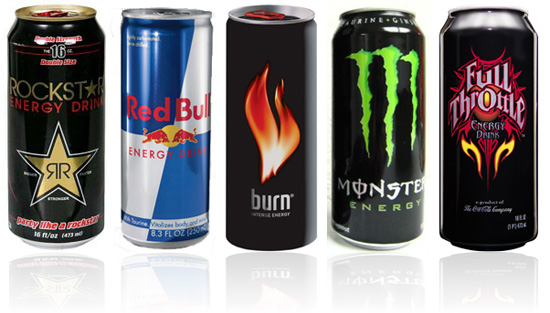
    People work hard, students study as much as they can, and athletics exercise every single day. We, as human beings, have a busy life with full of things to do. But at some point, we feel so tired and a rest is needed, but there is still to much to do and we postpone ourselves. Most people stay awake with full of energy by drinking energy drinks. But, are they good for our health? 

    An energy drink is a carbonated beverage that contains caffeine and other energetic components such as taurine or ginseng intended to boost the drinker's energy. According to a research presented this year at the University of Siena, consuming energy drinks can exert acute positive benefits on myocardial performance. In fact, after conducting a trial on 35 healthy people, scientists discovered that these beverages enhanced contractions of both the left and right ventricles of the heart delivering a positive effect on myocardia function.   Taurine plays the main role stimulating the release of calcium from the sarcoplasmic reticulum; the calcium regulates muscle cells contractions, therefore the heart works better and better. This research has opened doors for helping patients with cardiac diseases to further our understanding of the potential benefits or risks of energy drink consumption. 

    However, the over-consumption can be very dangerous; the caffeine can lead to a variety of health problems. It can increase blood pressure, lead to high heart rates, insomnia, nervousness, restlessness, stomach problems, etc. It can really affect us if we are careless. Energy drinks was recently under the spotlight because a death of a girl was linked to these drinks. In this webpage there is a video and the story about her. 

    Sometimes we are not aware of what contains what we eat and drink; even worse, we do not worry about and just consume because everybody consumes them. It is important to remember that everything can be a good thing, but only in the right measure and in the most appropiate manners. Most of the time, companies have improved in all aspects incorporating technology and certain advances in order to make 'better' products. But, do companies warn us about what they are putting into products? Is it really important to know what we are taking and eating? Are we aware of dangerous ingredients, elements, and chemicals that drinks, packaged and canned food have? Is it necessary to know that?

    Listen to this expert who talks about the hidden dangers of energy drinks.

Blue Brain: Super computer!

Henry Markham's team in Switzerland have been working since 2005 with IBM to build a supercomputer using digital simulation of the human brain. The Blue Brain project tries to create realistic models of the human brain by parts and both healthy and diseased brains. Scientists of this team have successfully applied simulation to a rat cortical column, to find out how the neuronal network is connected.
The main idea is to discover the basic principles and functions of the human brain, to develop certain strategies that will lead them to build the complete brain.
Henry Markham has stated in several talks that the brain makes its own version of the universe, and then it projects it. This processes are the ones that they are trying to simulate to introduce even more powerful computers based on these processes and neuronal networks. It will also incorporate more data that neuro-scientists and biology will use to have a wider understanding of the brain. In this sense, it could also mean that neuroscience and medicine could find a cure or better treatments to mental conditions and diseases such as Alzheimer and autism.
Now, if you think about the ethics, is this project really trying to find a cure and make better treatments? Isn't it just a project to create super powerful computers and get rid of workers? what is going to happen when the whole brain is completed? are people going to be replaced by computers?

I'd like you to watch Henry Markham's talk on TED and reflect on how is this going to affect our future.


Friday, November 2, 2012

I'm walking in the rain !


The rain is often synonym of getting wet or staying at home, but an impressive art installation in London is going to give us the chance to walk under a rain storm without getting wet.  This innovative experiment tries to combine art and technology, and it really works. 

The “Rain Room”, created by the art studio Random International, simulates a rain storm where visitors can walk right through the entire room, more than 1.000 square feet, without being touched by the water, almost 220 gallons continuously recycled. This interactive project uses several 3D cameras to perceive human’s movement inside the room. As the cameras detect some movement, the rain streams on and off respectively; leaving people completely dry.  
Many of us relate art with paintings in a Museum or sculptures in some opening space, but nowadays our mind is getting used to new kind of art expressions. And as we are in a technological era, we have to start seeing technology as a demonstration of art. 

 If you want to look for more information about this experiment, you can watch this video:

The end of cash, the beginning of a digital economy


Money is the most important abstraction that human beings have ever devised, but that abstraction has not been fully embraced. The process of configuring the systems we enjoy nowadays has taken a long time, as is always the case with this kind of development. 

At the beginning of human history, when societies realized that they need to interact with other societies because of a shortage of resources, they took up bartering for many generations. As the time passed humans realized that a more sophisticated process was needed. So in the first coins were minted in Lydia in the 8th century B.C.


Nowadays, cash’s role is waning, as mobile and encrypted currency let us plug directly into the digital economy. Our society is taking us to new contexts that need some changes in the kind of currency that we use. New technologies are appearing every day and force us to change how we purchase things. One solution to monetary gap left by cash for comes from a new application by Apple. Passedbook is the simplest way to get all our passes, like Boarding passes, tickets, store cards and coupons: you buy them via the Appstore, you receive a code that you show in stores, and it is charged to your credit account. 

Money is not disappearing, it is just changing. Digital or electronic money it has a lot of advantages, but it also have some problems related to the insecurity of the internet, like phishing and identity theft. 

Are you willing to change the way you  buy?

If you want to learn more about this topic, click on the next article:

Time for cash to cash out?